
Dubai’s business environment rewards performance, speed, and resilience—but it also places silent strain on the cardiovascular system.
For high-performing professionals and executives, heart health is often overlooked until warning signs appear, despite being the biological engine behind sustained energy, focus, and long-term success.
Cardiovascular health optimization is no longer just about avoiding disease. It’s about protecting performance, reducing long-term risk, and building physiological resilience in a high-stress, sedentary, and fast-paced lifestyle. In Dubai, where long working hours, frequent travel, and social dining are the norm, proactive heart health strategies matter more than ever.
This guide explores how evidence-based lifestyle medicine and personalized health coaching can support cardiovascular longevity—helping you move from reactive care to a strategic, preventive approach that aligns with your professional life.
The Dubai Factor: Environmental Risks to Cardiovascular Health
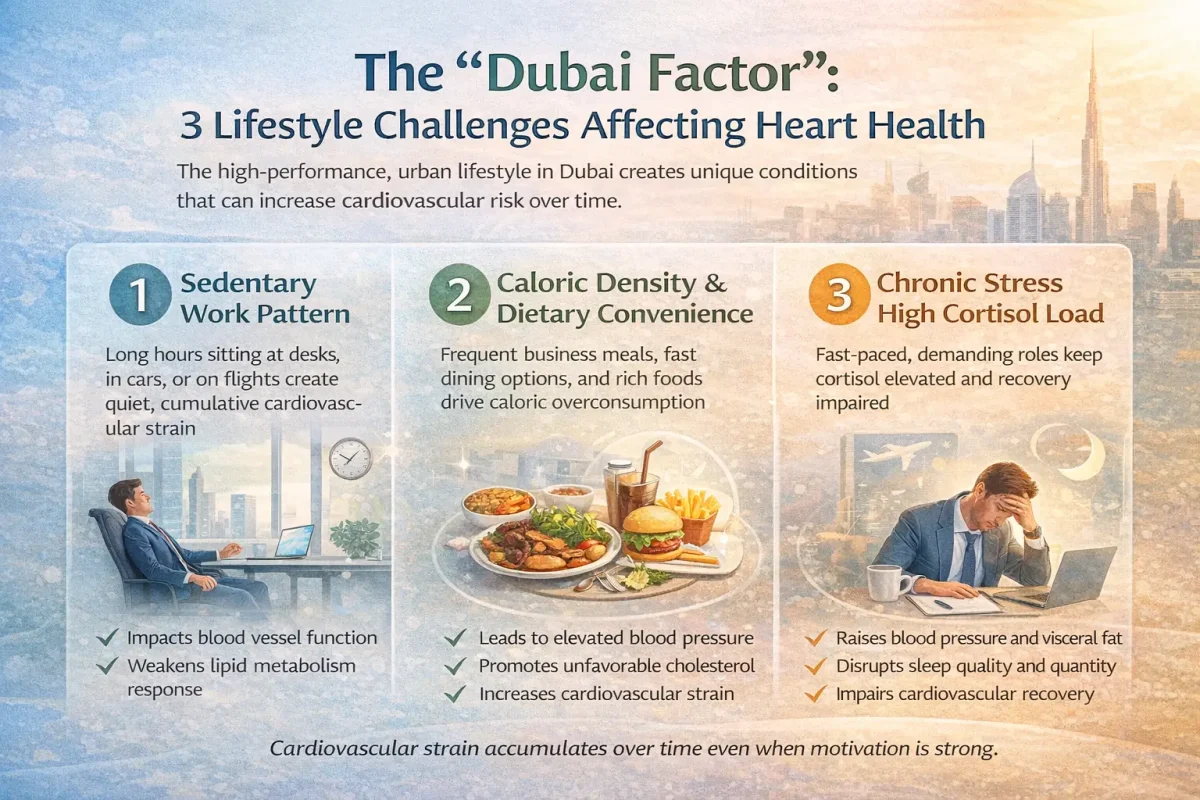
Living and working in a global hub like Dubai offers exceptional professional and lifestyle advantages—but it also creates a distinct cardiovascular risk profile. These challenges are rarely the result of poor motivation or lack of knowledge. More often, they are a predictable physiological response to a high-performance urban environment.
The Sedentary Work Pattern
Modern professional life in Dubai is largely sedentary. Long hours spent in meetings, at desks, in cars, or on flights can easily add up to 8–12 hours of sitting per day. Research shows that prolonged physical inactivity negatively affects blood vessel function, lipid metabolism, and insulin sensitivity—even among individuals who exercise several times per week. Over time, this pattern quietly increases cardiovascular risk.
Caloric Density and Dietary Convenience
Dubai’s vibrant dining culture and business-driven social schedule make food both accessible and abundant. Frequent business lunches, late-night meals, and on-demand delivery often result in higher consumption of refined carbohydrates, excess sodium, and ultra-processed foods. These dietary patterns are strongly associated with elevated blood pressure, unfavorable cholesterol levels, and increased cardiovascular strain.
What the Science Says:
Optimizing heart health doesn’t necessarily mean aggressive medication or radical life overhauls. The most powerful interventions are often found in consistent, evidence-based lifestyle adjustments.
The Power of Nutrition
The Mediterranean diet remains the gold standard for heart health. The landmark CORDIOPREV trial demonstrated that a Mediterranean diet rich in extra virgin olive oil, nuts, and fish was significantly more effective than a low-fat diet in preventing recurrent cardiovascular events. It works by reducing inflammation and improving endothelial function—the health of your blood vessel linings.
Movement Matters
You do not need to become a marathon runner to protect your heart. Systematic reviews of cardiac rehabilitation programs consistently show that regular aerobic activity—like brisk walking or cycling—reduces cardiovascular mortality and improves quality of life. The key is consistency, aiming for 150 minutes of moderate activity per week.
Weight Management and Metabolic Health
Excess weight, particularly around the abdomen, places direct strain on the heart. However, you don’t need to reach a “perfect” BMI to see benefits. Clinical trials have shown that modest weight loss (5-10% of body weight) through lifestyle changes can lead to meaningful improvements in blood pressure, triglycerides, and blood sugar control.
Clinical evidence supports that a Mediterranean dietary pattern—rich in olive oil, nuts, and vegetables—is associated with slower atherosclerosis progression and reduced cardiovascular events compared with low-fat diets. (source PubMed)
Actionable Strategies for the Busy Professional
Scientific evidence only creates impact when it can be applied in real life. For executives and professionals in Dubai, heart-healthy habits must fit into demanding schedules, frequent meetings, and travel—not compete with them. The goal is not perfection, but repeatable systems that protect cardiovascular health with minimal friction.
- Apply Mediterranean Principles—Without Overhauling Your Routine
You don’t need to cook every meal or follow rigid rules to benefit from heart-protective nutrition. Instead, focus on simple, high-impact principles:
- Add before you restrict: Include vegetables, legumes, or a handful of nuts with meals rather than focusing only on what to remove.
- Choose quality fats: Favor olive oil, avocado, and nuts over processed or creamy sauces.
- Prioritize omega-3 intake: Aim for fatty fish such as salmon or mackerel at least twice per week to support vascular and inflammatory balance.
These small adjustments consistently improve lipid profiles and reduce cardiovascular risk over time.
- Engineer Movement into Your Workday
A demanding schedule does not eliminate the need for movement—but it does require smarter integration.
- Walk-and-talk meetings: Phone calls or informal discussions can be done while walking.
- Post-meal activity: A 10-minute walk after meals supports blood sugar regulation and cardiovascular efficiency.
- Interrupt sitting time: Stand, stretch, or walk briefly every hour to protect vascular function and circulation.
These “movement snacks” accumulate meaningful cardiovascular benefits without requiring gym-level time commitments.
- Regulate Stress Physiology, Not Just Stress Exposure
Stress itself is unavoidable in leadership roles; unmanaged stress physiology is the problem.
- Brief breathing resets: Simple techniques such as box breathing for 2–3 minutes can lower heart rate and blood pressure between meetings.
- Sleep as a recovery tool: Prioritize a cool, dark, and device-free sleep environment to allow cardiovascular repair and hormonal regulation.
- Strategic boundaries: Protecting even short periods of recovery improves long-term heart health more than sporadic intensity.
Managing stress responses consistently reduces cortisol burden and supports long-term cardiovascular resilience.
How HealthFix Supports Your Journey
At HealthFix, we believe generic advice rarely leads to sustainable change. Every executive’s physiology,
lifestyle demands, and health goals are unique—and your cardiovascular strategy should reflect that.
Personalized
Nutrition, movement, and recovery protocols tailored to your schedule, preferences,
and key metabolic markers—designed to fit real executive life.
Evidence-Based
We rely on clinically supported strategies—such as Mediterranean-style nutrition,
structured physical activity, and lifestyle medicine principles.
Coaching-Focused
We act as your strategic partner—helping you navigate business dinners, travel schedules,
and stress so consistency becomes achievable.
We don’t replace your cardiologist. We support their care by helping you implement the daily habits
that protect cardiovascular function, resilience, and long-term health.
The Best Investment You Can Make
Your heart beats approximately 100,000 times a day, fueling every decision you make and every success you achieve. Protecting it is not just a health goal; it is a performance strategy.
By taking proactive, evidence-based steps today, you are investing in a future where you have the energy and vitality to enjoy the fruits of your hard work.
Start small. Choose one meeting to walk during tomorrow. Swap one side of fries for a salad. Your heart notices every choice.